Anwar Sadat's Assassination: A Peacemaker's Fatal Price in 1981
The name Anwar Sadat resonates with a complex legacy: a visionary leader who dared to break decades of animosity, a recipient of the Nobel Peace Prize, and ultimately, a victim of extremist revenge. On October 6, 1981, the world watched in horror as Anwar Sadat, the Egyptian President assassinated in 1981, fell to an ambush during a military parade in Cairo. This tragic event, which saw the Egyptische President Werd In 1981 Vermoord, was not merely a security failure; it was a brutal punctuation mark in a chapter of audacious diplomacy, forever altering the course of Middle Eastern politics.
Sadat’s daring quest for peace with Israel, while earning him international acclaim, ignited a fierce backlash from those who saw his efforts as a betrayal of the Arab and Palestinian cause. His assassination laid bare the deep ideological fissures within Egypt and the broader Arab world, highlighting the perilous tightrope walked by leaders who challenge entrenched narratives.
A Vision of Peace: Sadat's Groundbreaking Initiatives
Anwar Sadat assumed the presidency of Egypt in 1970 following the death of Gamal Abdel Nasser. Inheriting a nation still reeling from the 1967 Six-Day War and entangled in the War of Attrition, Sadat initially focused on restoring national pride and strategic leverage. This culminated in the meticulously planned 1973 Yom Kippur War (known in Egypt as the October War), which, despite not being a decisive military victory, shattered the myth of Israeli invincibility and provided Sadat with the political capital he needed to pursue a radical new path: peace.
His most audacious move came in November 1977 when he embarked on an unprecedented visit to Jerusalem, becoming the first Arab leader to formally address the Israeli Knesset. This symbolic gesture, broadcast globally, electrified the world and set the stage for direct negotiations. These efforts bore fruit in September 1978 with the signing of the Camp David Accords, brokered by US President Jimmy Carter. These historic agreements led to the 1979 Egypt–Israel Peace Treaty, formally ending the state of war between the two nations and returning the Sinai Peninsula to Egyptian control.
For his courage and commitment to peace, Sadat, alongside Israeli Prime Minister Menachem Begin, was awarded the Nobel Peace Prize in 1978. His actions were hailed by many as a monumental step towards regional stability, a beacon of hope in a perpetually troubled land. However, this vision of peace, so celebrated in the West, simultaneously sowed seeds of profound anger and resentment closer to home.
The Seeds of Discontent: Why Peace Provoked Extremism
While Sadat’s peace efforts were lauded internationally, they were met with fierce condemnation across much of the Arab world. Many Arab nations and the Palestine Liberation Organization (PLO) viewed his unilateral peace treaty with Israel as a betrayal of Arab solidarity and the Palestinian cause. Egypt, once a leading voice in the pan-Arab movement, found itself isolated; it was suspended from the Arab League, and diplomatic ties were severed by numerous countries. This isolation contributed to Sadat's growing unpopularity among segments of his own population who felt he had abandoned their brethren.
Domestically, Sadat's policies were increasingly seen through the lens of betrayal by various groups. Economic challenges and a perceived crackdown on dissent further fueled internal opposition. However, the most virulent opposition came from Islamist extremist organizations, most notably the Egyptian Islamic Jihad (EIJ), led by Khalid Al-Islambuli. These groups saw Sadat's recognition of Israel and his secular governance as an affront to Islamic principles and a capitulation to Western influence. They believed that peace with Israel was a violation of religious law and that Sadat, by pursuing it, had become an apostate.
The EIJ, a radical offshoot of the Muslim Brotherhood, aimed to overthrow the Egyptian government and establish an Islamic state. For them, Sadat's peace treaty was not merely a political disagreement but a profound ideological transgression, making him a legitimate target for elimination. The growing tension between the secular state and burgeoning Islamist movements created a volatile environment, setting the stage for the tragic events of October 1981.
The Fateful Day: October 6, 1981
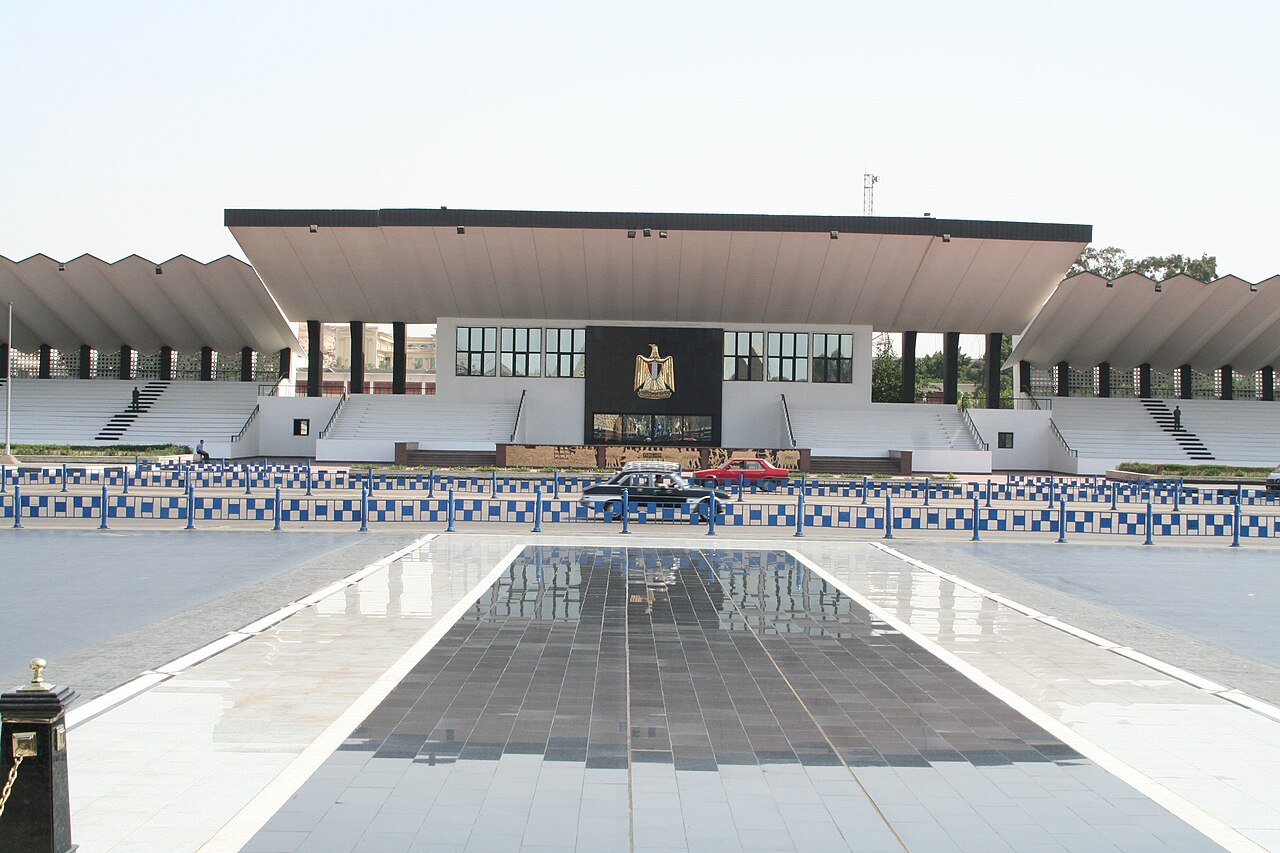
The eighth anniversary of the 1973 Yom Kippur War, October 6, 1981, was meant to be a day of national celebration. President Sadat, in his capacity as Field Marshal of the armed forces, was presiding over a military parade in Cairo, observing the elaborate aerial and ground displays. Surrounded by dignitaries, including foreign diplomats, he stood on the presidential reviewing stand, accepting salutes.
What followed was a chilling act of coordinated violence. As Egyptian Air Force jets performed overhead, creating a distraction, a military truck carrying artillery pieces unexpectedly halted in front of the reviewing stand. From its back, a squad of militants, led by Lieutenant Khalid Al-Islambuli, leapt out. Dressed in military fatigues, they initially lobbed two hand grenades, which exploded relatively harmlessly. However, the confusion provided cover for the attackers to unleash a torrent of automatic gunfire directly into the stand. Eyewitnesses reported that the assault lasted for well over a minute, a terrifying duration given the supposed heavy security presence.
The precision of the attack, the ease with which the assailants infiltrated the parade, and the sustained nature of the gunfire all pointed to a meticulously planned operation, suggesting the attackers may have benefited from insider intelligence or significant logistical support. President Sadat was struck multiple times. At least ten other people in the stand, including a Cuban ambassador, were killed, and many more were wounded. Sadat was quickly airlifted to a military hospital but succumbed to his injuries approximately two hours later, marking the end of a pivotal era for Egypt and the Middle East.
Security forces eventually neutralized the attackers, killing two on the spot and apprehending the rest amidst the panic and chaos. The event sent shockwaves globally, prompting declarations of emergency in Egypt and a mixed international response that underscored the deep divisions Sadat's peace had created.
Legacy and Aftermath: A Region Forever Changed
The immediate aftermath of Sadat's assassination saw Vice President Hosni Mubarak swiftly sworn in as his successor. Mubarak would go on to rule Egypt for nearly three decades, maintaining the peace treaty with Israel while largely stifling political dissent, leading to a period of stability but also simmering grievances. The perpetrators of the assassination, including Khalid Al-Islambuli, were tried, convicted, and executed, but the ideological battle they represented persisted.
Sadat's death became a crucial moment in modern Middle Eastern history, symbolizing the perilous tension between secular governance and rising Islamism. It highlighted the profound challenges faced by leaders seeking to forge peace in a region scarred by decades of conflict and entrenched ideologies. Internationally, reactions were sharply divided:
- Condemnation: US President Ronald Reagan famously condemned the act as "infamy," praising Sadat as a "great friend," "statesman," and "champion of peace." Western nations mourned the loss of a key ally and a symbol of hope for dialogue.
- Celebration: In stark contrast, some factions, particularly in Libya and within the PLO, celebrated the news. Tripoli radio declared that "every tyrant has an end," reflecting the widespread Arab anger over the peace treaty.
The assassination cemented Egypt's isolation within the Arab League for years, only to be gradually readmitted later. More broadly, it underscored the vulnerability of peacemakers in conflict-ridden regions and the enduring power of extremist narratives to derail diplomatic efforts. Sadat’s story remains a poignant reminder of the high personal cost of political courage and the complex interplay of peace, politics, and religious extremism in the Middle East.
For more insights into the profound impact of this event, consider reading Sadat's Death: A Turning Point for Egypt and the Middle East. To delve deeper into the paradox of his life, explore The Paradox of Sadat: A Peacemaker's Fatal Price in 1981.
Conclusion
Anwar Sadat’s assassination on October 6, 1981, remains one of the most significant and shocking political killings of the 20th century. The act that saw the Egyptische President Werd In 1981 Vermoord was a direct consequence of his courageous, albeit controversial, pursuit of peace with Israel. His legacy is a complex tapestry woven with threads of visionary leadership, unwavering determination, and ultimately, the tragic vulnerability of those who dare to defy the status quo. Sadat’s assassination serves as a powerful historical lesson on the inherent dangers faced by peacemakers in deeply divided societies and the enduring struggle between dialogue and extremism. His pursuit of peace, though ending in violence, indelibly shaped the modern Middle East and continues to provoke reflection on the true cost of forging a different path.