The Paradox of Sadat: A Peacemaker's Fatal Price in 1981
History is replete with figures whose bold visions and courageous actions ultimately sealed their tragic fates. Few embody this paradox as profoundly as Anwar Sadat, the charismatic leader whose quest for peace in the tumultuous Middle East earned him a Nobel Prize but ultimately led to his brutal assassination. It was on October 6, 1981, during a celebratory military parade in Cairo, that the Egyptian President was gunned down, a pivotal event that sent shockwaves across the globe and irrevocably altered the course of Egyptian and Middle Eastern politics.
Sadat's journey from revolutionary to peacemaker was marked by a series of audacious decisions that challenged deeply entrenched ideologies and decades of animosity. His commitment to peace, particularly with Israel, was a beacon of hope for many, yet it simultaneously ignited a fiery resentment among those who viewed his diplomatic efforts as a betrayal of Arab and Islamic principles. This article delves into the life, legacy, and tragic demise of the man who dared to seek a different path, exploring the profound implications of his choices and the violent end that awaited him.
Anwar Sadat: A Visionary for Peace in a Turbulent Region
Anwar Sadat rose to power in 1970, succeeding the revered Gamal Abdel Nasser as Egypt's president. Initially seen as a transitional figure, Sadat quickly demonstrated a political acumen and strategic boldness that defied expectations. His leadership was first tested on the battlefield, famously initiating the 1973 Yom Kippur War (known in Egypt as the October War). While militarily complex, this conflict was a strategic masterstroke, restoring Arab pride and demonstrating Egypt's capacity to challenge Israeli dominance, thereby creating a crucial opening for diplomacy.
However, it was Sadat's subsequent pivot from warfare to peacemaking that truly defined his presidency. In a move that shocked the world and infuriated much of the Arab establishment, Sadat undertook a historic visit to Jerusalem in 1977. Standing before the Israeli Knesset, he declared his readiness to make peace, effectively breaking a decades-long diplomatic deadlock. This unprecedented act of courage paved the way for the Camp David Accords in 1978, mediated by U.S. President Jimmy Carter. These landmark agreements led to the signing of a peace treaty between Egypt and Israel, for which Sadat shared the Nobel Peace Prize with Israeli Prime Minister Menachem Begin in 1978.
His vision was clear: to move Egypt beyond endless conflict and dedicate its resources to national development. This commitment to peace was not merely political; it was deeply personal, driven by a desire to spare future generations the horrors of war. Yet, as history often demonstrates, pioneering change, especially in such a volatile region, comes with immense risk. For a deeper dive into his peace efforts and the subsequent backlash, explore Anwar Sadat Assassination: Peace Efforts and Extremist Revenge.
The Deepening Divide: The Cost of Courageous Diplomacy
While Sadat was hailed as a global statesman in the West, his peace initiatives created a profound schism within the Arab world. Many Arab nations viewed the unilateral peace treaty with Israel as a betrayal of the Palestinian cause and a violation of the principle of Arab solidarity. Egypt was swiftly suspended from the Arab League, and its membership was only reinstated in 1989. This international isolation, coupled with internal socio-economic challenges, fueled a growing wave of dissent within Egypt.
Domestically, Sadat's policies were met with increasing hostility, particularly from a rising tide of Islamist extremism. Groups such as the Egyptian Islamic Jihad, led by figures like Khalid Al-Islambuli, vehemently opposed Sadat's secular governance and his peace treaty with Israel, which they deemed an affront to Islamic principles and a capitulation to Western influence. Sadat's government responded with crackdowns on dissent, arresting thousands of political opponents, including Islamists, secular intellectuals, and Coptic Christians, further exacerbating tensions. The perception among these extremists was that Sadat had betrayed his nation's religious and national identity, making him a prime target.
The paradox deepened: a leader pursuing peace found himself increasingly at war with elements of his own people. This growing chasm between Sadat's vision and the radicalized opposition created an explosive atmosphere, setting the stage for the tragic events of October 1981.
October 6, 1981: The Day Peace Was Silenced
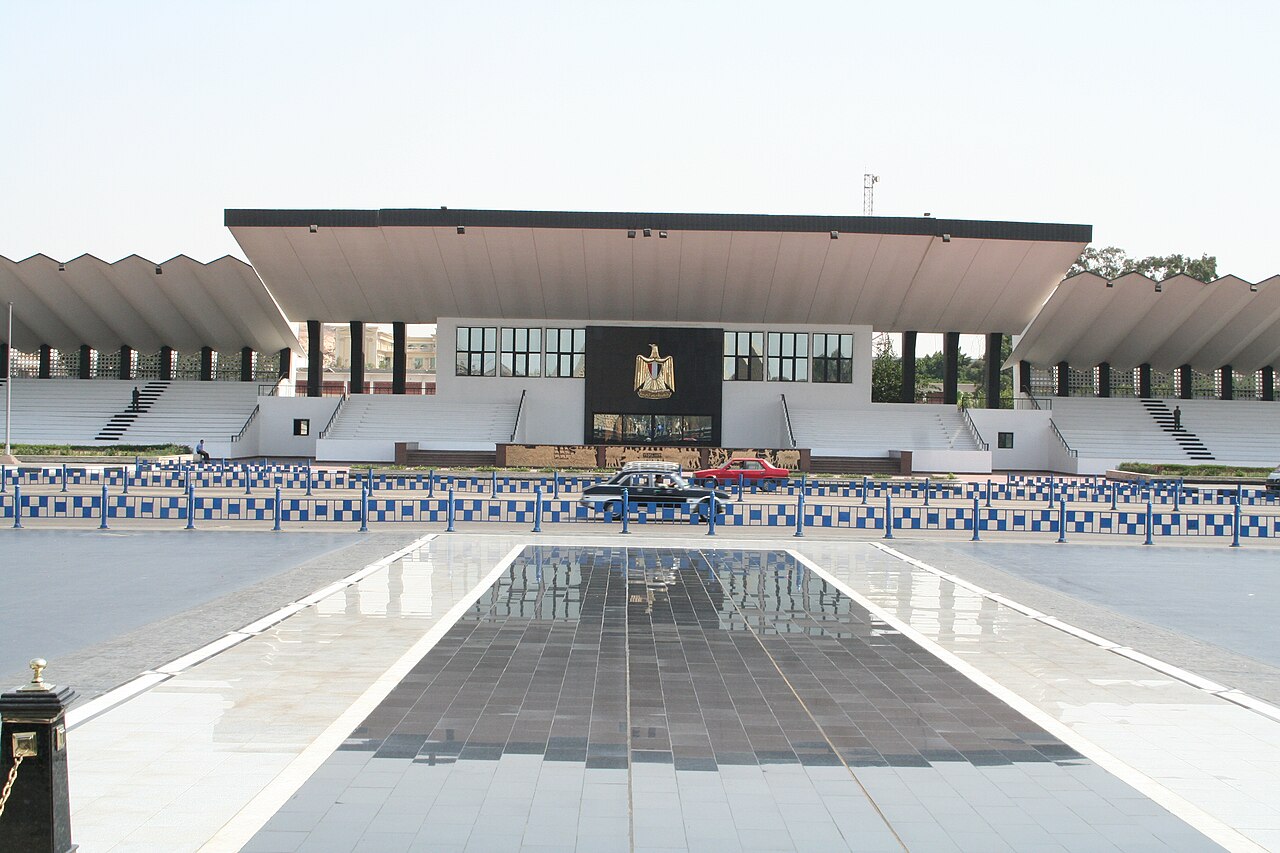
The day of the assassination, October 6, 1981, was meant to be a celebration. It marked the eighth anniversary of the Yom Kippur War, a moment of national pride for Egypt. President Sadat, in his role as Field Marshal of the armed forces, was attending a grand military parade in Cairo, reviewing troops and aerial displays from a presidential stand. The atmosphere was festive, with dignitaries, including foreign diplomats, present.
Suddenly, the celebration turned to horror. As Egyptian Air Force jets soared overhead, two grenades exploded near the reviewing stand. Moments later, a military truck, part of the parade procession, veered off course. Gunmen, disguised as soldiers, leapt from the truck and stormed towards the presidential stand, unleashing a hail of automatic gunfire. Eyewitnesses recounted a terrifying minute or more of continuous shooting, with the attackers raking the officials with bullets before Sadat's bodyguards could effectively return fire.
The precision and audacity of the attack suggested a high level of coordination and intelligence. When the smoke cleared, President Sadat lay gravely wounded. He was immediately airlifted to a military hospital but succumbed to his injuries approximately two hours later. In total, Sadat and 11 others, including a Cuban ambassador, were killed, with many more seriously wounded. The nation was plunged into a state of emergency, grappling with the unthinkable: the loss of its president at the hands of its own citizens.
A Legacy Forged in Blood: Egypt's Shifting Sands After 1981
The immediate aftermath of Sadat's assassination saw Vice President Hosni Mubarak swiftly sworn in as the new president, ensuring a seamless, albeit somber, transition of power. Mubarak would go on to rule Egypt for nearly 30 years, largely maintaining Sadat's peace treaty with Israel while employing a more authoritarian approach to suppress internal dissent, particularly from Islamist movements. The perpetrators of the assassination, members of the Egyptian Islamic Jihad led by Khalid Al-Islambuli, were swiftly apprehended, tried, and executed, but their act had already unleashed profound changes.
Internationally, reactions were sharply divided. U.S. President Ronald Reagan condemned the assassination as an "act of infamy," mourning the loss of a "great friend" and "champion of peace." However, in parts of the Arab world, the news was met with jubilation, with Libya's Tripoli radio famously declaring, "every tyrant has an end." The Palestinian Liberation Organization (PLO) also refrained from condemning the act, reflecting the deep-seated resentment Sadat had incurred.
The assassination of Anwar Sadat marked a crucial turning point in modern Middle Eastern history, symbolizing not only the fragility of peace in a region rife with conflict but also the enduring struggle between secular governance and the rising tide of Islamism. It underscored the dangerous repercussions for leaders who dare to challenge the status quo, and the extreme lengths to which radical factions would go to oppose policies they deemed apostate. For a deeper understanding of its long-term impact, consider reading Sadat's Death: A Turning Point for Egypt and the Middle East.
Lessons from Sadat's Paradox: Navigating Peace and Extremism
Anwar Sadat's story offers critical insights into the complexities of geopolitical leadership and the inherent risks of pioneering peace. Here are some key takeaways:
- The High Price of Visionary Leadership: Sadat demonstrated immense courage in pursuing a path divergent from the prevailing Arab consensus. His example highlights that true leadership often requires standing against popular sentiment, but this can come at a devastating personal cost.
- The Enduring Power of Ideology: The assassination revealed the deep-seated ideological opposition to peace with Israel among certain extremist groups. It serves as a stark reminder that political solutions, however well-intentioned, can ignite violent reactions when they clash with deeply held religious or nationalist beliefs.
- The Internal vs. External Battle for Peace: While Sadat successfully forged external peace with Israel, he struggled to build internal consensus and manage domestic dissent. Achieving lasting peace requires not only diplomatic breakthroughs but also robust internal reconciliation and addressing the grievances that fuel extremism.
- The Shadow of Political Assassination: Sadat's death underscored how a single act of violence can dramatically alter a nation's trajectory. It can create power vacuums, usher in new leadership with different agendas, and solidify repressive tactics in the name of stability.
- Understanding Motivations: To prevent future tragedies, it is vital to understand the complex motivations of extremist groups. While condemning their actions, analyzing the roots of their grievances—whether perceived betrayal, religious fervor, or socio-economic frustration—is crucial for crafting effective counter-narratives and long-term stability strategies.
In conclusion, the assassination of Anwar Sadat remains a somber and pivotal moment in history. The Egyptian President who was tragically killed in 1981 was a man of profound courage, a peacemaker whose audacious vision brought hope to millions but ultimately cost him his life. His paradox—a leader celebrated internationally for peace yet condemned by extremists at home—serves as a powerful, enduring symbol of the ongoing struggles for stability, coexistence, and the immense personal sacrifices sometimes demanded in the pursuit of a better world.