Anwar Sadat's Assassination: A Watershed Moment for Egypt and the Middle East
On October 6, 1981, a military parade celebrating the eighth anniversary of the Yom Kippur War turned into a scene of unparalleled tragedy. In a meticulously planned attack, Anwar Sadat, the revered and controversial Egyptian president, was brutally assassinated. His death sent shockwaves across the globe, irrevocably altering the trajectory of Egypt and the broader Middle East. The question, "welke egyptische president werd in 1981 vermoord?" immediately evokes the name of Anwar Sadat, a leader whose bold pursuit of peace ultimately cost him his life.
Sadat's presidency, from 1970 until his untimely demise, was defined by a series of audacious moves that challenged the prevailing political currents of the Arab world. While celebrated internationally for his courage, particularly his groundbreaking peace initiatives with Israel, these very actions stoked the fires of extremism within his own nation. Understanding Sadat's assassination requires delving into the complex interplay of his progressive policies, the intense regional dynamics, and the deep-seated ideological divisions that ultimately led to his downfall.
The Architect of Peace: Sadat's Vision and Achievements
Anwar Sadat ascended to power in 1970 following the death of Gamal Abdel Nasser, inheriting a nation deeply scarred by regional conflicts and economic challenges. Initially underestimated, Sadat quickly demonstrated a pragmatic and independent leadership style that diverged sharply from his predecessor's pan-Arab nationalism. His early presidency was marked by a strategic military offensive against Israel in 1973, known as the Yom Kippur War, which, despite its military outcomes, restored Arab pride and set the stage for future diplomatic engagement.
However, it was Sadat's subsequent embrace of peace that etched his name into the annals of history. In a move that stunned the world and infuriated many in the Arab bloc, he undertook a historic visit to Jerusalem in 1977, directly addressing the Israeli Knesset. This unprecedented gesture of reconciliation paved the way for the Camp David Accords in 1978, a landmark peace treaty negotiated with Israeli Prime Minister Menachem Begin and brokered by U.S. President Jimmy Carter. For their monumental efforts, Sadat and Begin were jointly awarded the Nobel Peace Prize in 1978. These accords brought an end to decades of hostilities between Egypt and Israel, repositioning Egypt as a key player in international diplomacy but also isolating it within the Arab world.
Sadat's vision was clear: to prioritize Egypt's national interests, secure peace, and shift focus towards domestic development. He believed that endless conflict with Israel was unsustainable and detrimental to his people's well-being. This conviction, while lauded by Western powers, profoundly alienated a significant portion of his own region, setting the stage for the dramatic events of 1981. For a deeper look into the intricate balance Sadat tried to strike, you might find The Paradox of Sadat: A Peacemaker's Fatal Price in 1981 insightful.
Seeds of Discontent: The Rise of Extremism Against Sadat
While Sadat's peace initiatives garnered international acclaim, they simultaneously sowed seeds of intense discontent within Egypt and across the Arab world. The peace treaty with Israel, a nation many Arabs still considered an enemy, was viewed as a betrayal by hardliners, particularly Islamist groups who rejected any recognition of the Jewish state.
The immediate consequence of the Camp David Accords was Egypt's suspension from the Arab League, with its headquarters moved from Cairo to Tunis. This move symbolized Egypt's profound isolation and further fueled the narrative among Sadat's critics that he had abandoned the Arab cause. Internally, a resurgent Islamist movement, including groups like the Egyptian Islamic Jihad led by Khalid Al-Islambuli, saw Sadat's secularizing policies and peace with Israel as an affront to Islamic principles and a capitulation to the West. They condemned what they perceived as his authoritarian rule and suppression of dissent, viewing him as a leader who had strayed from the path of faith and justice.
The tension escalated throughout the late 1970s and early 1980s. Sadat's government responded with increasing repression, arresting thousands of political opponents, including journalists, intellectuals, and Islamist leaders. This crackdown, intended to quell dissent, instead pushed extremist elements further underground, hardening their resolve and leading them to believe that violence was the only recourse against what they saw as an illegitimate regime. The assassination of the Egyptian president in 1981 was, in many ways, the culmination of these escalating internal conflicts and ideological battles.
October 6, 1981: The Day the World Watched
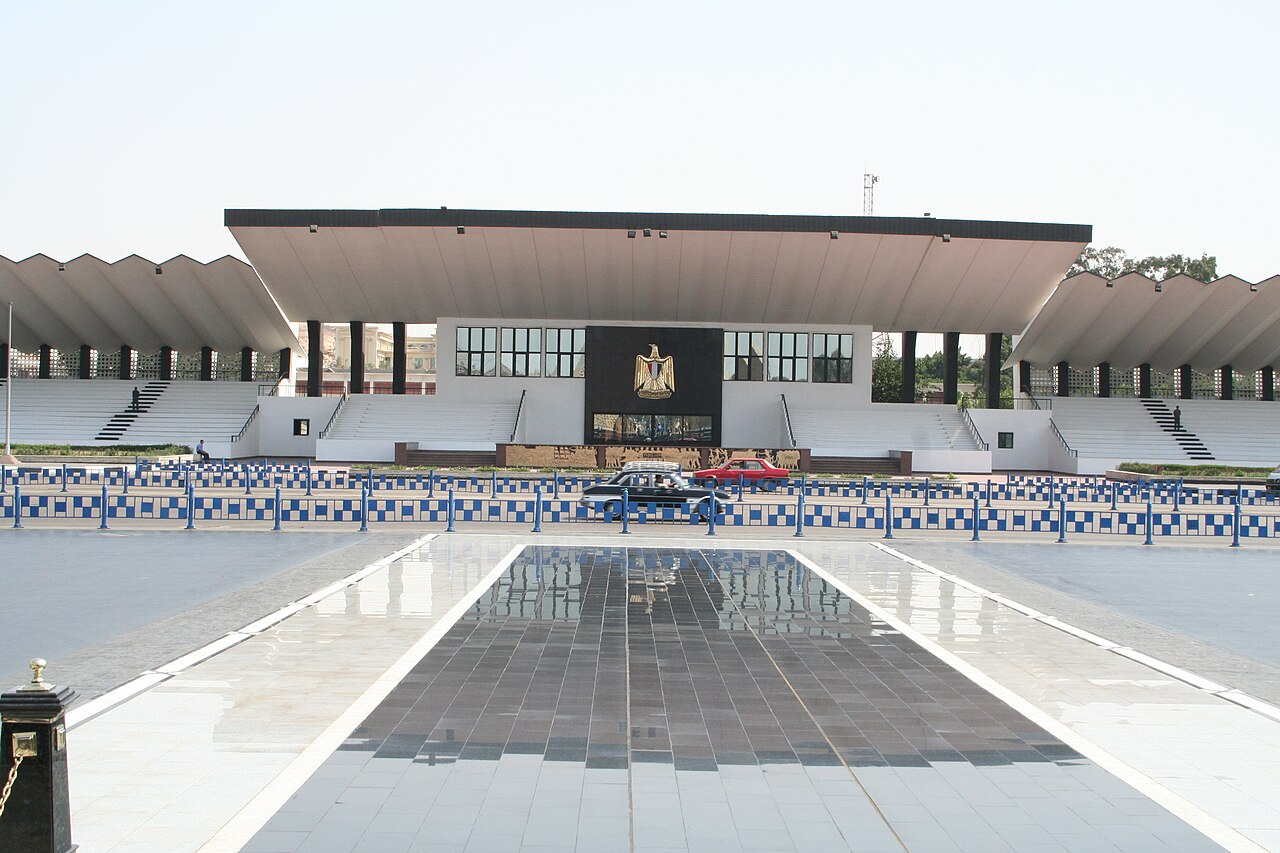
The morning of October 6, 1981, dawned with an air of national pride as Egypt prepared for its annual military parade in Cairo. President Sadat, in his capacity as Field Marshal of the armed forces, was attending the ceremonial event to commemorate the Yom Kippur War. He had taken the salute, laid a wreath, and was observing an aerial display from the presidential reviewing stand, surrounded by dignitaries, including foreign diplomats.
Suddenly, the festive atmosphere shattered. Eyewitnesses recounted a scene of shocking precision and brutality. Two grenades exploded, diverting attention, as gunmen, led by Lieutenant Khalid Al-Islambuli, leapt from a military truck that was part of the parade itself. They ran towards the presidential stand, opening fire with automatic weapons, raking the officials gathered there. Despite the typically stringent security measures for such an occasion, the attackers managed to maintain their assault for well over a minute, demonstrating a chilling level of coordination and audacity. It was later suspected that the attackers benefited from high-level intelligence and support, a claim that still resonates in conspiracy theories today.
Chaos erupted as crowds of military personnel and civilian spectators scrambled for cover. Sadat's bodyguards eventually returned fire, killing two of the attackers and overpowering the rest. However, by then, the damage was done. At least ten people lay seriously injured or dead inside the stand, including a Cuban ambassador. President Sadat himself was critically wounded and airlifted by helicopter to a military hospital, where he succumbed to his injuries approximately two hours later. His death, an event for which the "Independent Organisation for the Liberation of Egypt" claimed responsibility (though unverified), marked a violent end to a transformative era.
Reaction to Sadat's death was profoundly mixed. U.S. President Ronald Reagan condemned it as an "act of infamy," lamenting the loss of "a great friend, a great statesman, and a champion of peace." Conversely, in Libya, Tripoli radio celebrated, proclaiming "every tyrant has an end," as thousands rejoiced in the streets. Even the Palestinian Liberation Organization (PLO) refrained from condemning the assassination, with an official stating they had "expected this end of President Sadat" given his stance against Arab and Palestinian interests. The brutal assassination of the Egyptian president who was killed in 1981 underscored the deep divisions his policies had created.
A Nation Transformed: The Enduring Legacy of Sadat's Assassination
The immediate aftermath of Sadat's assassination saw Egypt plunged into a state of emergency. The perpetrators were swiftly apprehended, tried, and executed, but the event's repercussions extended far beyond the courtroom. Vice President Hosni Mubarak immediately succeeded Sadat, inheriting a nation teetering on the brink of internal strife. Mubarak maintained Sadat's core policies, particularly the peace treaty with Israel, and would go on to rule Egypt for nearly three decades, a testament to the stability he brought, albeit at the cost of democratic reforms.
Sadat's death unequivocally marked a critical turning point in Egyptian politics, intensifying the underlying tensions between secular governance and resurgent Islamism. The assassination underscored the deep ideological chasm within Egyptian society and forced successive governments to grapple with the formidable challenge of extremism. It highlighted the dangerous paradox where a leader's pursuit of peace on the international stage could provoke such violent internal opposition. The event also solidified the state's security apparatus, leading to decades of strong-arm tactics against perceived threats, a legacy that continues to influence Egyptian politics today.
The assassination serves as a powerful historical lesson: the pursuit of peace, while noble and necessary, often comes with immense domestic political costs, particularly in regions marked by deep-seated historical grievances and ideological divides. It demonstrates the fragility of even hard-won diplomatic victories when not accompanied by broad internal consensus or effective strategies to manage dissent. For more on the complex motives behind the attack, consider reading Anwar Sadat Assassination: Peace Efforts and Extremist Revenge.
In conclusion, the assassination of Anwar Sadat in 1981 was more than just the tragic end of a courageous leader; it was a profound historical event that reshaped Egypt and the Middle East. It solidified the Camp David Accords as an enduring, if controversial, pillar of regional stability, yet simultaneously ignited a prolonged struggle between the state and Islamist movements. Sadat's legacy remains a complex tapestry of bold diplomacy, personal sacrifice, and the enduring quest for peace in a turbulent world, a quest that ultimately led to the ultimate price for the Egyptian president who was assassinated in 1981.